

Dubai’s Creative Economy Is Becoming a Serious Global Investment Story
 Ria V Vaghela
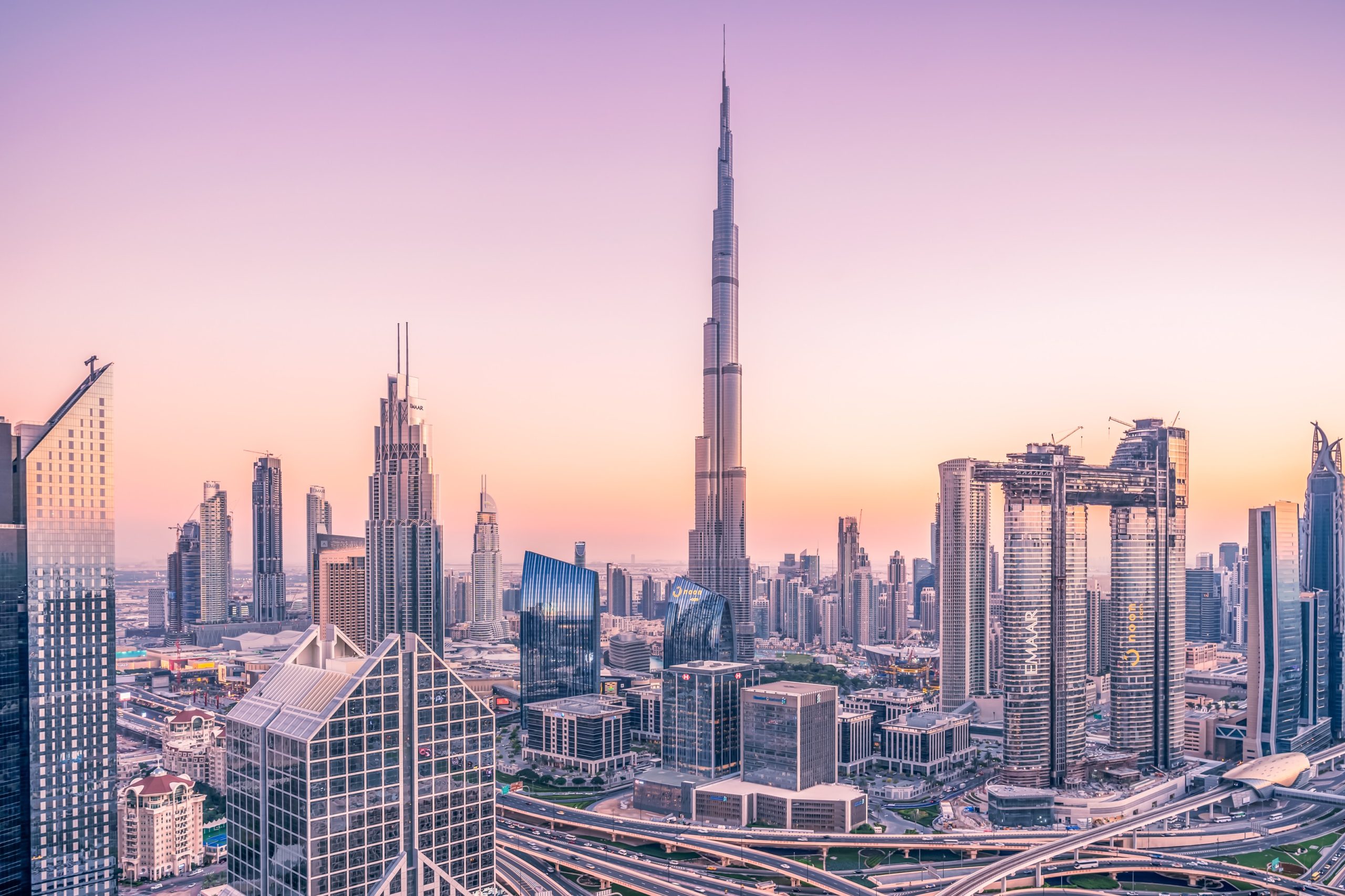
 Dubai’s economy is usually discussed through property, aviation, tourism and finance, yet one of its more interesting investment stories is developing in a category that sounds much softer: creative industries. In 2025, Dubai ranked first among 233 cities for the number of greenfield foreign direct investment projects in cultural and creative industries, holding the top position for a fourth consecutive year. The city attracted 754 announced projects, associated with 19,304 jobs and $3.756 billion of greenfield capital, placing it ahead of London, Singapore, Riyadh and Bengaluru by project count.
The timing gives those numbers a little more weight. Global FDI rose 6% to $1.6 trillion in 2025, according to UNCTAD, but the recovery was concentrated, with the world’s top 20 host economies attracting more than 80% of flows. Capital is moving, although it is becoming more selective about where it lands, and Dubai is managing to compete for it well beyond the traditional Gulf sectors.
Creativity, but with a much wider definition
“Creative industries” can easily bring galleries, fashion and film to mind, but Dubai’s definition stretches much further into the modern services economy. The 2025 projects covered advertising and public relations, specialised computer programming, data processing, digital services, film, media, gaming, AI-powered creative technologies, design, architecture and professional services, alongside more traditional cultural activities.
That overlap between creativity and technology is probably the more useful way to read the data, because a gaming studio, design business or AI-media company needs much of the same infrastructure as any other international company: skilled people, reliable digital networks, access to clients, straightforward company formation and a legal environment that allows the business to scale. Dubai has spent years trying to bundle those ingredients together, while also developing specialist business clusters, long-term residency routes and the digital and logistics infrastructure needed to operate internationally.
The capital is international as well, with India accounting for 19% of greenfield capital flowing into Dubai’s creative industries in 2025, followed by the US at 17.5%, China at 13%, Malaysia at 12% and the UK at 9%. By project count, the UK led with 21.5%, just ahead of India at 21%, giving the story a genuinely cross-border flavour rather than making it simply another Gulf diversification programme.
A regional shift that is becoming harder to ignore
Dubai’s creative push sits inside a broader UAE economy that has been expanding outside hydrocarbons. Real UAE GDP grew 6.2% in 2025 to AED1.9 trillion, while non-oil GDP grew 6.8% to AED1.5 trillion, with construction, finance, real estate and transport among the stronger sectors. The country also attracted $48.3 billion of inbound FDI in 2025 and ranked ninth globally, while retaining second place worldwide by greenfield project count.
Saudi Arabia offers a useful contrast because diversification there is progressing under a much heavier oil shock. In the second quarter of 2026, Saudi real GDP fell 4.8% from a year earlier as oil activity dropped 24.7%, while non-oil activity still edged up 0.6%. That is better read as resilience than momentum, because the non-oil economy remained positive but growth was modest, showing that diversification can soften an energy shock without making the region immune to it.
The geopolitical cost has not disappeared
The uncomfortable part of the story is that the Gulf’s long-term investment plans are being built alongside very immediate geopolitical risk. The IMF has documented disruption to energy production, trade routes, air traffic and logistics from the Middle East conflict, while its July assessment of the UAE said uncertainty was weighing on tourism, transportation, trade and real estate even as strong financial and policy buffers helped the economy absorb the shock.
Dubai International Airport offers a good example of how quickly regional risk can reach the real economy, with passenger traffic falling 31.3% year-on-year in the first half of 2026 to 31.5 million as the Iran war disrupted Gulf travel. As recently as Thursday, Gulf markets were still moving around developments in US-Iran diplomacy and the Strait of Hormuz, so an investment hub built around global mobility remains naturally exposed when one of the world’s most important transport and energy corridors becomes less predictable.
What the numbers really say
Dubai’s creative-industry ranking is not proof that geopolitical risk has faded, nor is an announced greenfield project the same thing as completed investment, future revenue or lasting productivity. A more convincing interpretation is that the Middle East is becoming economically more layered: oil and shipping still shape the region, while software, media, design, finance, logistics, AI and professional services are taking a larger role in where international capital and talent choose to go.
For Dubai, that represents a meaningful shift in economic identity, because creative industries are increasingly moving beyond branding, entertainment and cultural tourism into the same global contest for skilled workers, intellectual property, technology and corporate investment that cities from London to Singapore are trying to win. The geopolitical backdrop remains complicated, but the investment data suggests the economic story of the Middle East is becoming considerably broader than the one traditionally told through oil alone.
Sources
- Government of Dubai Media Office, 25 August 2026, cultural and creative industries FDI data. Dubai creative industries FDI release
- UNCTAD, World Investment Report 2026, global FDI trends. UNCTAD World Investment Report 2026
- Federal Competitiveness and Statistics Centre, 30 May 2026, UAE GDP data. UAE GDP 2025 data
- UAE Ministry of Investment / UNCTAD data, 8 July 2026, UAE FDI inflows. UAE FDI 2025 data
- General Authority for Statistics, Saudi Arabia, 30 July 2026, Q2 2026 GDP flash estimate. Saudi Arabia Q2 GDP release
- International Monetary Fund, April and July 2026, Middle East economic spillovers and UAE assessment. IMF regional outlook IMF UAE assessment
- Reuters, 26–27 August 2026, Dubai airport traffic and latest Gulf market/geopolitical developments. Dubai airport traffic report Latest Gulf market update
Disclaimer: This article is for educational purposes only and should not be considered financial advice. Always conduct your own research before making investment decisions.
AI has been used in curating sources as well as enhancing the wording and structure of the article
Ria Vaghela
MSc Finance graduate from the London School of Economics and Political Science (LSE)

Ria V Vaghela is an M&A Associate at RSM UK and an MSc Finance graduate from the London School of Economics and Political Science (LSE). She has worked at Jefferies, Dial Partners, GP Bullhound and 7i Capital prior to RSM UK gaining an extensive experience in finance. She has also worked as an Editor and Content Writer for The Representative Media. Apart from finance, she is interested in reading books on philosophy, self-help and economics, likes to paint and play lawn tennis.
Recommended Posts

AI Is Not Ending Work But It Is Rewriting the Career Ladder
August 24, 2026

Human bias and market imperfections
August 17, 2026