

The Industry Is Only Half the Story
 AnkitaMangale
When we look at an industry, we often see only the businesses operating within it. We follow their growth, compare their competitors, examine their revenues and try to understand the markets they serve. But there is usually much more happening beyond what we can see.
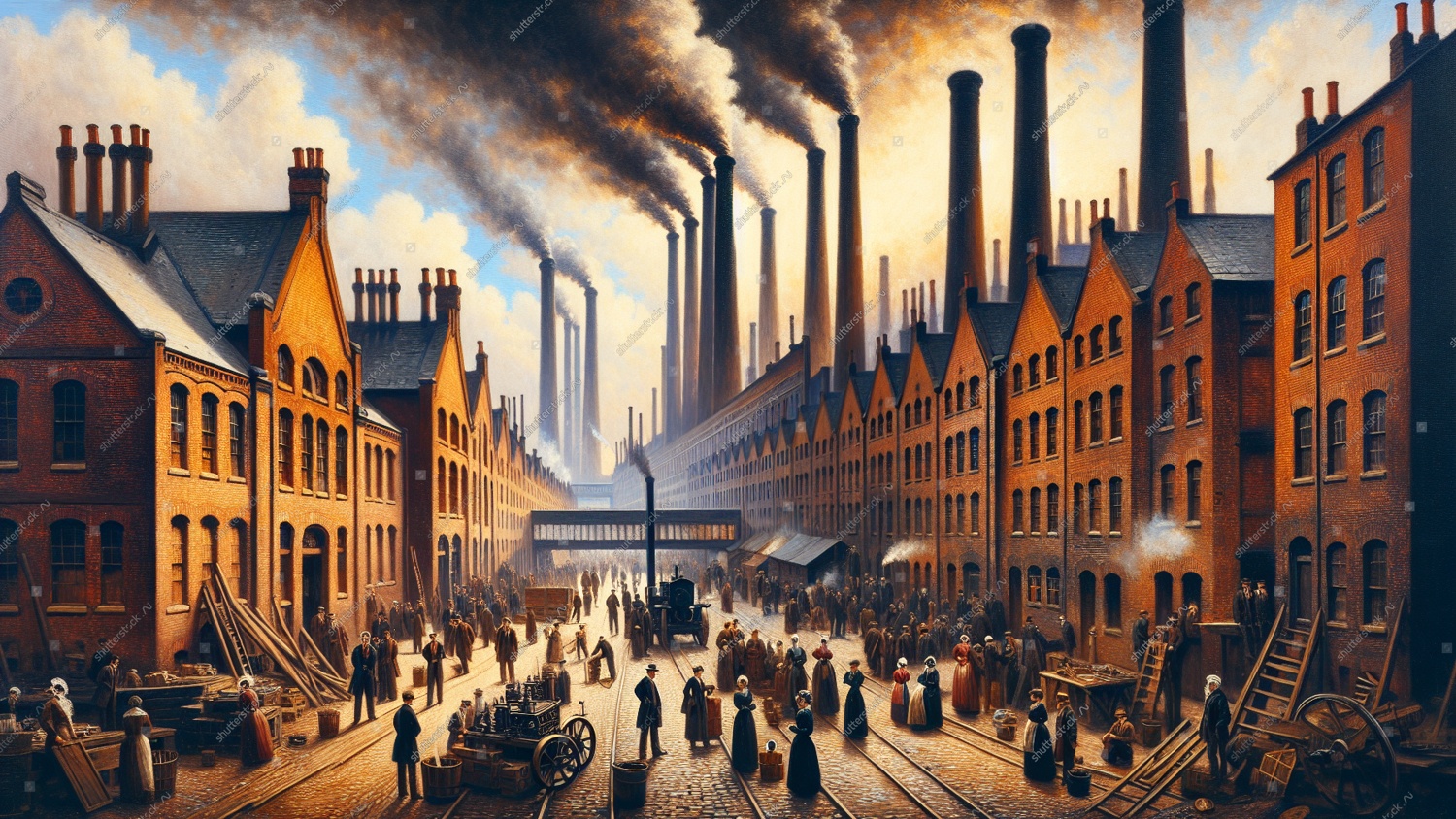
Consider Britain’s manufacturing industry. During the Industrial Revolution, factories became central to economic growth. Yet their success depended on much more than the goods they produced. Coal supplied energy, iron provided materials for machinery, railways transported products and banks helped businesses finance expansion. The growth of manufacturing created opportunities for several other industries, connecting businesses that might otherwise have appeared unrelated.
These connections continued to develop as the economy changed. The introduction of electricity, improvements in transport and, later, the development of computers and the internet transformed how businesses operated. Each development created new opportunities, but also increased the dependence between industries.
Britain’s economic transformation provides an interesting example. According to the House of Commons Library, services accounted for 70% of UK economic output in 1990. By 2023, their share had reached 80%. Over the same period, manufacturing’s contribution fell from 17% to 9%.
This does not mean manufacturing has disappeared. Rather, the structure of the economy has changed, with services becoming increasingly important alongside manufacturing, construction and other activities.
However, the relationship between industries is not always immediately visible. A manufacturer may depend on a bank for financing, a technology company for software and an energy provider to keep production running. A disruption in any one of these areas can affect the wider business.
The same relationships extend beyond national borders.
South Korea, for example, transformed its economy through industrial development, investment in education and technological advancement. Vietnam followed a different path, becoming an important part of international manufacturing and trade networks.
The World Bank reports that foreign-owned firms account for 73% of Vietnam’s exports. It also highlights that domestic business participation in global value chains fell from 35% in 2009 to 18% in 2023. This raises an important question about economic development: producing and exporting goods does not necessarily mean capturing the greatest share of the value created.
A product may be designed in one country, manufactured in another, financed through international markets and sold across several regions. Different businesses contribute to its production, distribution and final sale. The value created is therefore spread across a much wider network.
This is why looking at a company or industry in isolation can provide an incomplete picture. Its performance may depend on suppliers thousands of miles away, changes in consumer demand, energy prices, access to finance or developments in technology.
The connections between industries have become even more important as businesses expand into new markets and adopt different ways of operating. What once appeared to be separate sectors now frequently share customers, infrastructure, technology and investment.
An industry, therefore, is more than a collection of companies producing similar goods or services. It is part of a wider economic system shaped by people, capital, infrastructure, knowledge and markets.
But understanding these connections is only the beginning.
If industries depend so heavily on one another, what happens when the conditions around them begin to change? What makes a business rethink its operations, or an established industry move in an entirely different direction?
Sometimes the pressure builds long before the change becomes visible.
And that is where the next part of the story begins.
References
- Bank of England – How has growth changed over time?
- House of Commons Library – Industries in the UK
- Office for National Statistics – UK Input-Output Analytical Tables
- World Bank – Vietnam 2045: Trading Up in a Changing World
- World Bank – Korea: Economic transformation
Disclaimer
This article is written for educational and discussion purposes only and reflects the author’s personal views. It does not constitute financial, investment, legal or tax advice. Figures relate to the periods stated and are based on the sources listed. Countries and industries are examples of economic developments, not recommendations to buy, sell or hold any investment. Readers should conduct their own research before making financial decisions.
Ankita Mangale
Voluntary Content Contributor

Recommended Posts

Why Is Gold Falling? What Are Analysts Actually Saying?
November 24, 2026

Why Saving Markets From Every Crash Could Make the Next One Worse
November 24, 2026

GTA VI Is Finally Here But Can One Game Carry a $40 Billion Company?
November 24, 2026