

Aerospace in 2026: Recovery, Disruption, and Where it Stands Today

 Ria V Vaghela
 Five years on from COVID bringing global aviation to a standstill, the industry is in a rather unusual spot. Passenger demand is at record highs, yet airlines are cutting routes, raising fares, and still seeing margins come under pressure. Recovery and fresh disruption are unfolding at the same time, and to really understand what is happening, you need to look at the full chain, from the passenger seat right through to the deals market.

The Recovery
Global air travel crossed 5bn passengers in 2025 for the first time ever, a 6.7% increase on the previous year, according to IATA. In absolute terms, the pandemic is no longer the central issue. However, the recovery has not been even. Short-haul travel rebounded quickly, while long-haul only properly stabilised in 2023 to 2024. Business travel has structurally declined as remote working has become permanent, while leisure and premium leisure are now driving demand growth. Airlines that were built around corporate travellers have had to rethink how they operate commercially.
Even with record passenger numbers, the economics remain fragile. IATA expects a 3.9% net profit margin for 2026, which is roughly $7.90 per passenger. Labour is now the largest cost at 28% of total expenses, with fuel close behind at 25.7%. Return on invested capital sits at 6.8%, still below the 8.2% cost of capital. Aviation creates significant value for economies, but retains very little of it.
The Fuel Shock
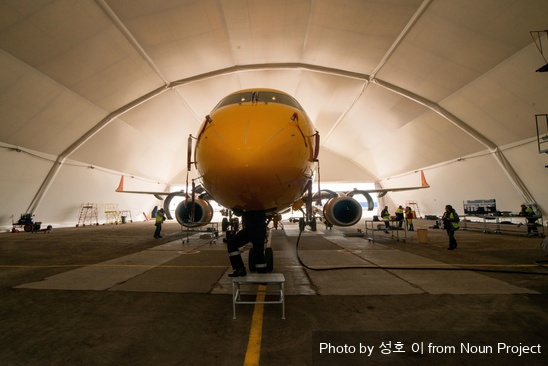
Those projections came before February 2026. Following US-Israeli strikes on Iranian oil infrastructure and disruption in the Strait of Hormuz, which handles around 20% of global seaborne oil flows, jet fuel prices rose from about $88 to more than $216 per barrel in under 6 weeks. That is a 140% increase in one of the industry’s biggest cost components.
Airlines have responded in a meaningful way. 19 of the world’s top 20 carriers have cut capacity, introduced fuel surcharges of up to €319 per leg on transatlantic routes, and suspended certain routes. Some have also warned of further cuts going into the summer. Airlines that moved away from fuel hedging during the calmer years of 2024 to 2025 are now more exposed. American Airlines, carrying $36.5bn in debt and without hedging, has seen its 2026 earnings estimates reduced from over $2.00 to $0.43 per share by UBS analysts. Delta, which owns a refinery in Pennsylvania, has maintained its guidance, highlighting how operating structure can matter more than size during a fuel shock.
The FX and Commodities Layer
Jet fuel is priced globally in US dollars. With the Federal Reserve holding rates at 3.50 to 3.75% and geopolitical risks supporting safe-haven demand, the dollar has strengthened in 2026. This adds further pressure for airlines in India, Europe and elsewhere that earn in local currencies but pay for fuel in USD. For Indian carriers like IndiGo, operating in a price-sensitive market, margins are being squeezed from both sides. Currency movements are not just a side factor in aviation economics, they are a key driver of profitability.
MRO: The Structural Winner
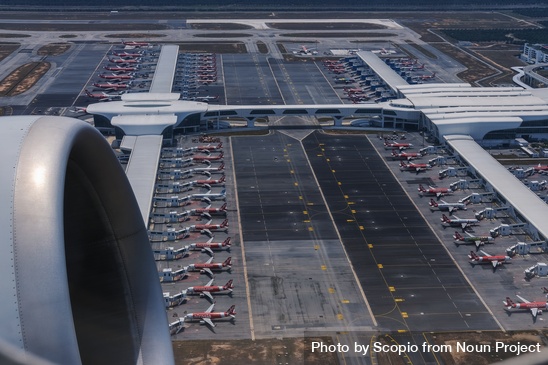
While airlines are under pressure, the maintenance, repair and overhaul sector is in a strong position. Airbus ended 2025 with a record backlog of 8,754 aircraft, and Boeing deliveries are delayed until 2027. Airlines that planned to retire older aircraft are unable to do so because new planes are simply not available. This means older fleets stay in service for longer, increasing maintenance needs and driving aftermarket demand. Public market valuations reflect this trend, with HEICO trading at 68x earnings, TransDigm at 40x, and StandardAero at 49x. MRO revenues tend to be long-term, recurring, and less sensitive to fuel price movements, which is exactly what investors are valuing.
Sustainability and M&A
Sustainable aviation fuel, or SAF, remains the industry’s main route to decarbonisation. However, adoption is still limited. It accounts for just 0.8% of total fuel consumption in 2026 and costs 3 to 5 times more than conventional jet fuel. The gap between ambition and reality remains significant. That said, the current oil shock strengthens the case for energy security, which could support further SAF development and policy backing.
On the deals side, more than $15bn in aerospace and defence transactions were completed in 2025. The key themes include vertical integration by OEMs, such as Boeing’s $4.7bn acquisition of Spirit AeroSystems and Safran’s $1.8bn purchase of Collins Aerospace’s actuation unit, as well as consolidation in the MRO space. Strategic buyers are paying premium valuations for aftermarket exposure. The fuel crisis may also push weaker airlines into restructuring, leading to more distressed deal activity.

What to Watch
The situation in the Strait of Hormuz is likely to be the defining factor for the rest of 2026. A stable resolution would bring fuel costs back down, while prolonged disruption could accelerate airline failures and consolidation. Airline Q1 results, due between April and May, will provide the first clear indication of margin impact. Boeing’s delivery pace also matters, as each new aircraft delivered allows an older, less efficient one to be retired. Policy around SAF, including mandates, pricing support, and carbon frameworks, will determine whether the green transition picks up pace or slows down again.
Sources:
- IATA Financial Outlooks (December 2024 and 2025)
- FTI Consulting, Global Aviation Themes 2026 (March 2026)
- Fortune, “The jet-fuel surge is making global flight connections disappear” (18 April 2026)
- NPR, “Jet fuel prices double” (16 April 2026)
- Royal Aeronautical Society, “Airlines and the Iran War” (April 2026)
- Kavout / Market Lens, “How Did Jet Fuel Prices Skyrocket” (April 2026)
- Aeroaffaires, “Jet Fuel in Crisis” (April 2026)
- PwC, Global M&A Trends in Industrials 2026 (January 2026)
- Aviation Business News / Alderman & Company (February 2026)
- Eplaneai / Alderman & Company, MRO M&A Outlook (December 2025)
- S&P Global / IATA, SAF Supply Report (December 2025)
- MUFG Research, FX Outlook 2026
- Datasite / ACG, Aerospace & Defense M&A 2026 (December 2025)
Disclaimer
This article is for informational purposes only and does not constitute investment advice, a recommendation, or an offer to buy or sell any securities. The views expressed are those of the author and are based on publicly available information believed to be reliable at the time of writing. Readers should carry out their own research and seek independent financial advice before making any investment decisions.
Ria Vaghela
MSc Finance graduate from the London School of Economics and Political Science (LSE)

Ria V Vaghela is an M&A Associate at RSM UK and an MSc Finance graduate from the London School of Economics and Political Science (LSE). She has worked at Jefferies, Dial Partners, GP Bullhound and 7i Capital prior to RSM UK gaining an extensive experience in finance. She has also worked as an Editor and Content Writer for The Representative Media. Apart from finance, she is interested in reading books on philosophy, self-help and economics, likes to paint and play lawn tennis.
Recommended Posts

Hardware vs. Software: How Global Investors Are Splitting Their AI Bets Between South Korea and India
September 18, 2026

Quick take on the Ultra-Luxury Car Market
September 15, 2026